August 1946 was a pivotal moment in the history of democracy in the United States. It was during this time that a group of World War II veterans in Athens, Tennessee found themselves fighting for democracy on their own soil. The Battle of Athens, also known as the McMahon County War, was an armed conflict that erupted after a hotly contested local election was marred by allegations of corruption and voter fraud.
The political establishment in McMahon County, including the sheriff and other officials, were accused of rigging the election to maintain their hold on power. This was not the first time that such allegations had been made. Voter fraud and corruption were rampant in many parts of the country at the time, and people were growing increasingly disillusioned with the political process.
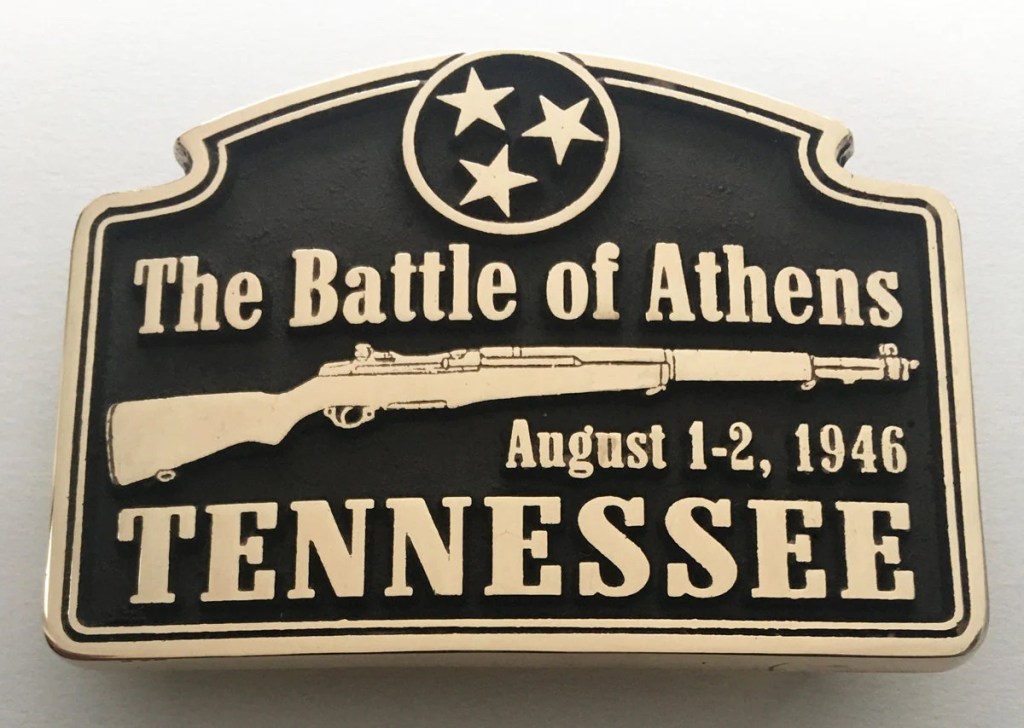
The returning veterans, who had just fought for democracy abroad, were outraged by the election results and decided to take action. Armed with their military training and a deep commitment to democracy, they demanded that the ballots be released and counted fairly. When their demands were refused, they seized control of the jail and the local armory, obtaining additional weapons and ammunition. They then laid siege to the courthouse, where the political establishment was holed up.
The Battle of Athens was not a one-sided affair. After several hours of gunfire and fighting, the political establishment fought back with equal ferocity. However, the veterans were not easily deterred. They were determined to fight for their rights and for the principles of democracy that they had just fought to defend.
Finally, after several hours of intense fighting, the political establishment surrendered. The veterans had won a decisive victory. The ballots were released, and it was discovered that the allegations of corruption and voter fraud were true. The veterans had exposed the truth and had restored democracy to McMahon County.
The Battle of Athens was celebrated as a victory for democracy, the Second Amendment, and the rule of law. It showed that ordinary people, armed with a deep commitment to democracy and the principles of freedom, could fight for their rights and win. It also highlighted the importance of the Second Amendment, which guarantees the right of the people to keep and bear arms.
The Battle of Athens had far-reaching consequences. It inspired other people across the country to fight for their rights and for democracy. It also led to changes in the political process, with greater transparency and accountability introduced to prevent future instances of corruption and voter fraud.
The legacy of the Battle of Athens lives on to this day. It is a reminder of the importance of democracy, the rule of law, and the principles of freedom that underpin the United States of America. It is also a testament to the courage and determination of the World War II veterans who fought for what they believed in, and who won a great victory for democracy on their own soil.
In conclusion, the Battle of Athens was a defining moment in the history of democracy in the United States. It showed that ordinary people could fight for their rights and win, and it inspired others across the country to do the same. It is a legacy that we should all be proud of, and one that we should strive to uphold in our own lives and in our own communities.
If you enjoyed reading this blog post and found it informative, we kindly ask that you consider leaving us a comment below and liking and sharing it with your friends and family. By doing so, you’ll be helping us reach a wider audience and spreading valuable information to those who may find it helpful. Additionally, your support means a lot to us, and it motivates us to continue creating high-quality content that you’ll enjoy. So, thank you for taking the time to read our blog, and we hope to see you again soon!
Readers: Note that the email address and logging in prompts do appear for comments on this blog, but providing an email address and logging in are not required.
 The Inquisitive Journal