Recently, NASA’s Planetary Defense Coordination Office has announced that a newly discovered asteroid, named 2023 DW, has a small chance of colliding with Earth in 23 years, potentially on Valentine’s Day in 2046. The asteroid is approximately the size of an Olympic swimming pool, and its 1 in 625 chance of striking Earth, as projected by the European Space Agency, has prompted it to rank 1 out of 10 on the Torino Impact Hazard Scale. However, NASA’s Jet Propulsion Laboratory’s Sentry system calculated the odds closer to 1 in 560.
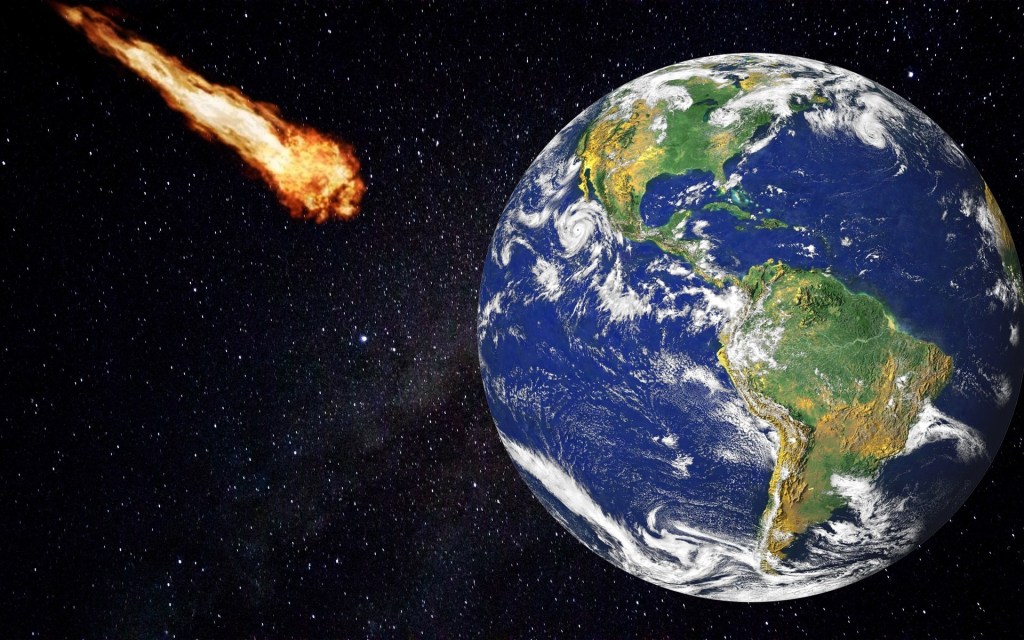
Despite its ranking, NASA’s Jet Propulsion Laboratory stated that the chance of a collision is extremely unlikely, with no cause for public attention or concern. According to Davide Farnocchia, a navigation engineer at the Jet Propulsion Laboratory in Pasadena, California, “this object is not particularly concerning.” NASA officials have warned that the odds of impact could change as more observations of 2023 DW are collected and additional analysis is performed.
It is common for newly discovered asteroids to appear more threatening when first observed. The Center for Near Earth Object Studies located at the Jet Propulsion Laboratory notes on its website that “such early predictions can often be ruled out as we incorporate more observations and reduce the uncertainties in the object’s orbit. Most often, the threat associated with a specific object will decrease as additional observations become available.”
While it may take a few days before new data can be collected due to the asteroid’s proximity to the moon, Farnocchia noted that the object will remain observable for weeks or even months with larger telescopes. The asteroid measures about 160 feet in diameter, according to NASA data, and as it orbits the sun, it has 10 predicted close approaches to Earth, with the nearest landing on February 14, 2046, and nine others between 2047 and 2054. The closest the asteroid is expected to travel to Earth is about 1.1 million miles.
Although the asteroid’s potential impact is a cause for concern, Farnocchia notes that the success of NASA’s DART mission, or the Double Asteroid Redirection Test, in September 2022 is evidence that humanity can be prepared to confront space rocks on potentially disastrous courses. DART intentionally collided a spacecraft into an asteroid to change its trajectory.
In conclusion, while the newly discovered asteroid 2023 DW does have a small chance of colliding with Earth in 23 years, the likelihood of a collision is extremely low, and additional observations and analysis will be performed to reduce uncertainties in the object’s orbit. It is a reminder that humanity must continue to monitor space objects to ensure that we can be prepared for any potential impacts. With the success of NASA’s DART mission, we can take comfort in knowing that we have the technology to mitigate any potential threats.
If you enjoyed reading this blog post and found it informative, we kindly ask that you consider liking and sharing it with your friends and family. By doing so, you’ll be helping us reach a wider audience and spreading valuable information to those who may find it helpful. Additionally, your support means a lot to us, and it motivates us to continue creating high-quality content that you’ll enjoy. So, thank you for taking the time to read our blog, and we hope to see you again soon!
 The Inquisitive Journal