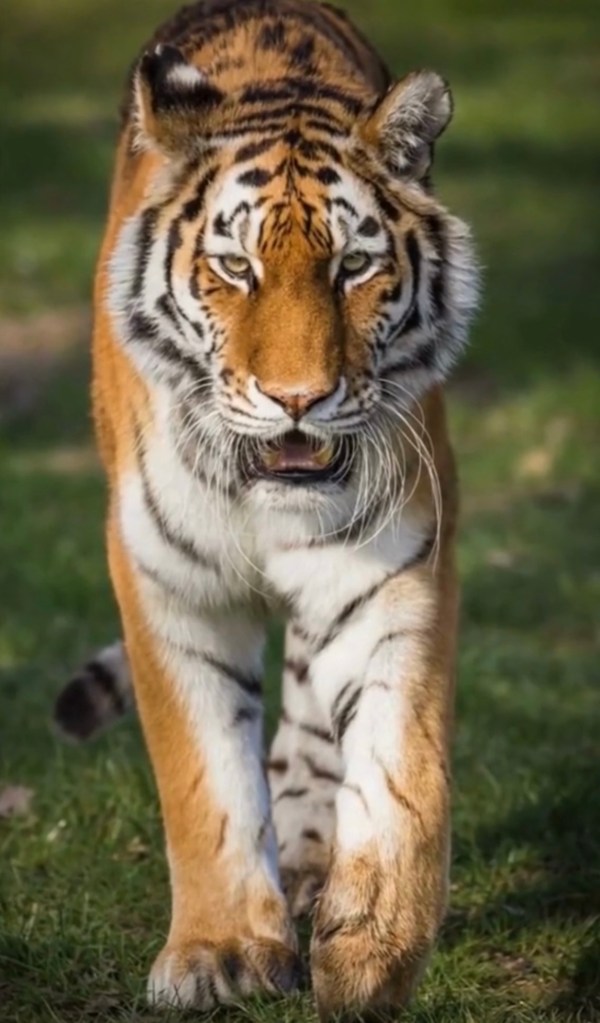
Tigers are some of the most awe-inspiring and majestic creatures on the planet. They are known for their striking red-orange fur that sets them apart from other big cats. But have you ever wondered why their fur is such a vibrant color? It turns out that there’s a fascinating reason behind this seemingly odd characteristic.
Tigers are stealthy predators that rely on surprise to catch their prey. So, it would make sense for their fur to blend in with their surroundings and help them remain hidden. However, the reality is quite different. The red-orange color of their fur actually makes them stand out in their natural environment.
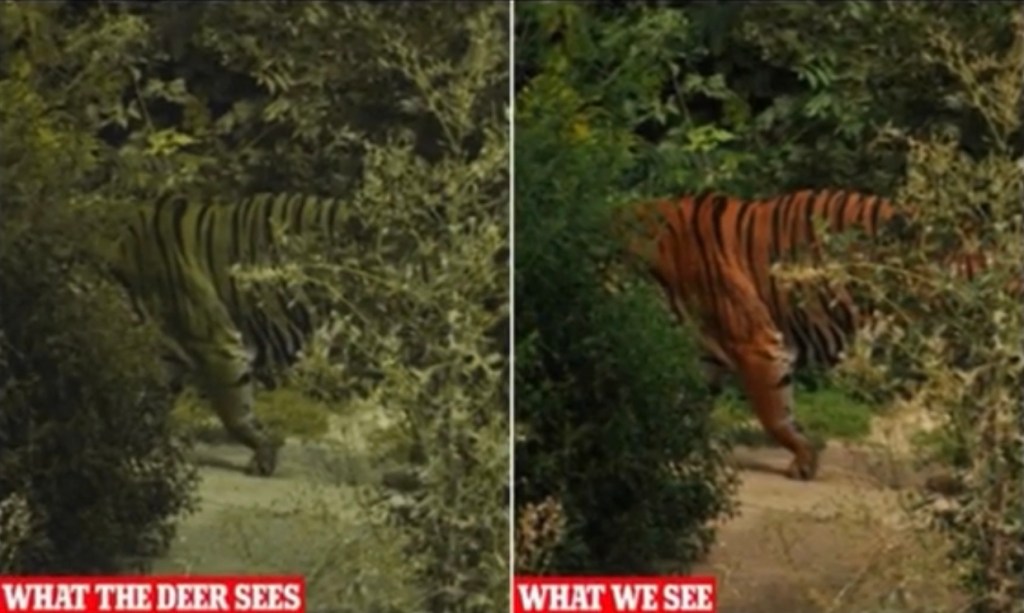
This may seem counterintuitive, but there’s a scientific explanation for this phenomenon. Most of the prey that tigers hunt, such as deer and other ungulate animals, have dichromatic vision. This means they can only see blue-green light and green light, and they are red color blind. To these animals, the red-orange color of the tiger’s fur appears as a shade of green foliage color.
This makes it extremely difficult for prey to detect tigers in the wild. When a tiger is hiding in the underbrush, it becomes almost invisible to deer, who are the most common prey for tigers. This is because the tiger’s red-orange fur blends in with the green foliage, making it virtually undetectable to their dichromatic vision.
This is a prime example of how predator-prey relationships can shape the evolution of animals. Over time, tigers with reddish-brown fur were more successful in hunting prey and passing on their genes. This led to the development of the iconic red-orange fur that we see in tigers today.
The benefits of this adaptation don’t stop at camouflage, however. The red-orange color of the fur may also help tigers regulate their body temperature. It’s been suggested that the color of the fur may absorb and retain heat from the sun, allowing tigers to stay warm in cooler temperatures.
In addition, the color of a tiger’s fur can also be an indicator of their health and vitality. Tigers with brighter and more vibrant fur are often seen as more attractive to potential mates, and may be more successful in breeding.
So, the next time you see a tiger with its striking red-orange fur, remember that there’s much more to this color than meets the eye. It’s a fascinating example of how evolution can shape an animal’s appearance and behavior, and how predator-prey relationships can drive these changes over time.
In conclusion, the red-orange fur of tigers is not just a striking physical characteristic, but a complex adaptation that has helped them survive and thrive in their natural environment. Understanding the science behind this fascinating phenomenon can deepen our appreciation for these incredible creatures and their place in the natural world.
If you enjoyed reading this blog post and found it informative, we kindly ask that you consider liking and sharing it with your friends and family. By doing so, you’ll be helping us reach a wider audience and spreading valuable information to those who may find it helpful. Additionally, your support means a lot to us, and it motivates us to continue creating high-quality content that you’ll enjoy. So, thank you for taking the time to read our blog, and we hope to see you again soon!
 The Inquisitive Journal