In 1948, Idaho’s state government embarked on a unique and controversial method of relocating beavers – dropping them out of planes. This may sound like a wild idea, but it was done with the intention of preserving vital wetland ecosystems. Beavers are known for building dams, which can create these ecosystems, but if they build them too close to human settlements, they can cause flooding and damage to structures.
Traditionally, beavers were moved by carting them away over land, but this method was stressful for the animals and could take days. In order to speed up the process and minimize stress, Idaho Fish and Game decided to try something new – parachute drops.
One of the beavers involved in this operation was a male named Geronimo. He was one of 76 beavers that were relocated via parachute. The method used was not without its challenges, however. The drop box needed to be perfect – originally, they considered using woven willow, but soon realized that the beaver might chew through it and escape on the plane or worse, midair. They ultimately settled on a wood box that held the beaver in place to prevent it from chewing. Suspension ropes looped through the top and bottom held the box together throughout transit. The boxes were affixed to surplus World War II parachutes.
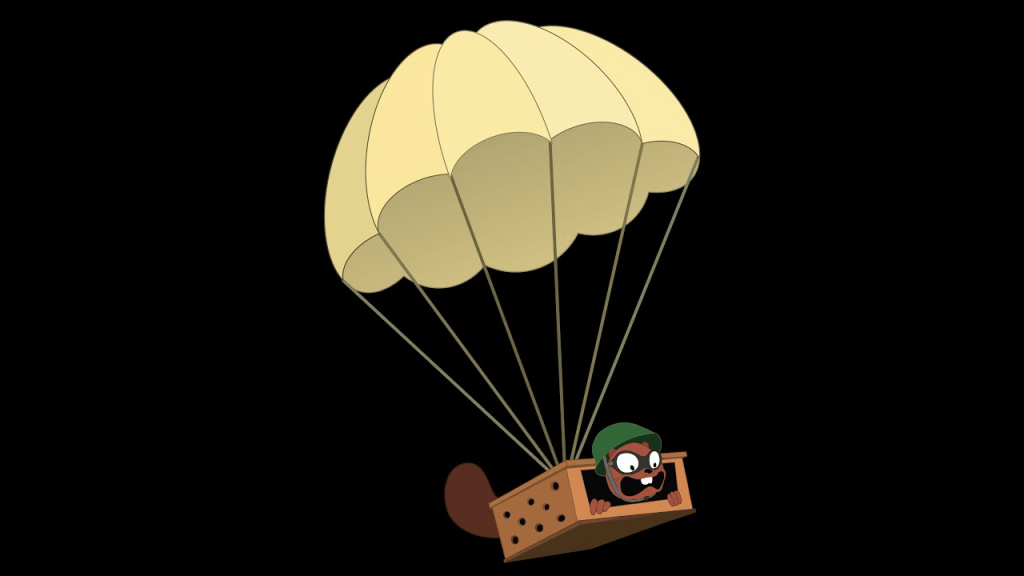
Once on the ground, the beaver could easily push the lid open and climb out. It may seem like a questionable method, but it was successful and allowed for the relocation of beavers in a faster, less stressful way.
While the idea of Geronimo the Parachuting Beaver may sound strange, it was a unique solution to a wildlife management problem. The success of this operation highlights the importance of thinking outside the box and considering new methods in order to protect our ecosystems and the animals that call them home.
 The Inquisitive Journal