As a new photographer, it can be overwhelming to navigate all the different camera settings. But don’t worry, there is one fundamental concept that can make it all much simpler: the exposure triangle.
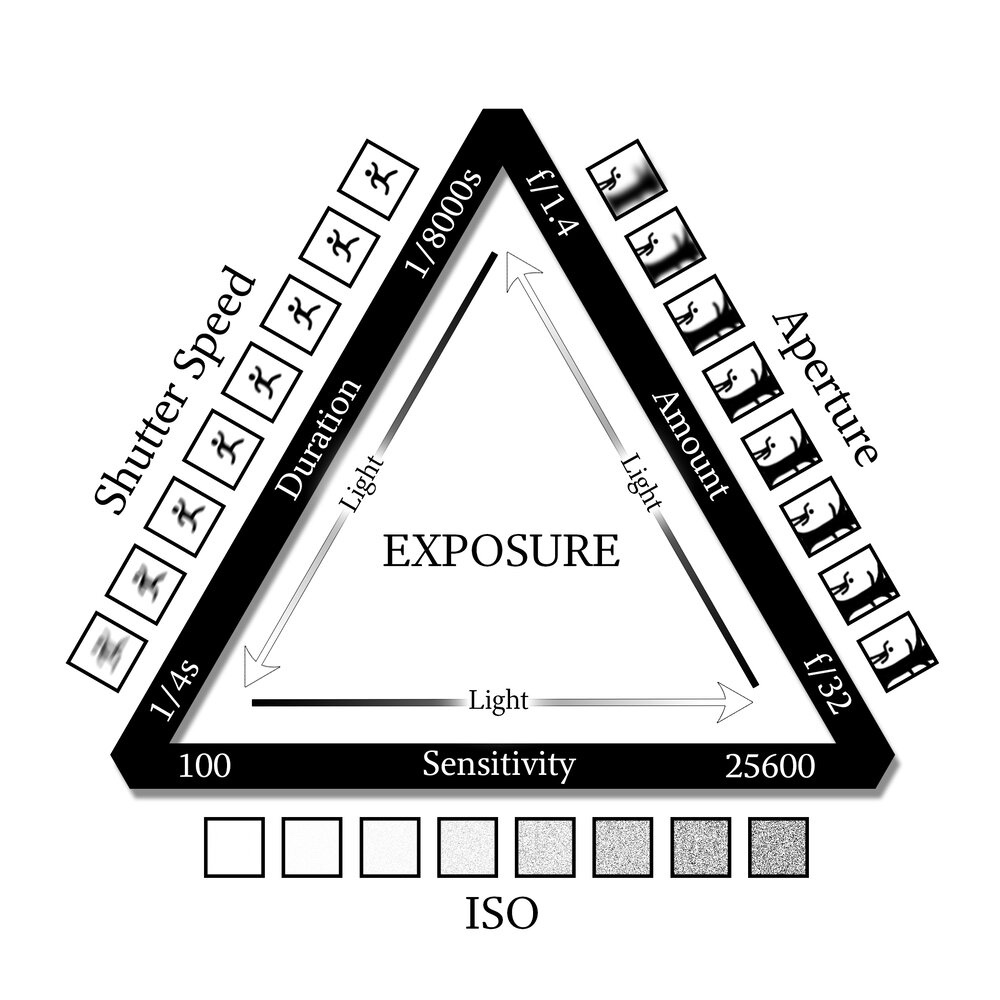
The exposure triangle is made up of three variables: ISO, aperture, and shutter speed. All three of these elements relate to light and properly exposing an image, and it’s our job as photographers to balance them.
ISO is the light sensitivity of the camera. A lower ISO, like 100 or 200, means that the camera is less sensitive to light. In contrast, a higher ISO means that the camera is more sensitive to light. If you’re shooting in low light conditions and need to brighten up the image, you can raise your ISO. However, keep in mind that a higher ISO will also result in more noise and a lower quality image.
Aperture is the opening of the lens’s diaphragm. A wide-open aperture, like f/1.2, allows more light in, while a higher aperture, like f/16 or f/22, has a smaller opening for light to come in. The wider the aperture, the more your background will be out of focus, while a tighter aperture will make your background more in focus.
Shutter speed refers to how fast the camera’s shutter is coming down. A slower shutter speed means that more light is coming in and the camera is capturing motion slower, resulting in more blur. A faster shutter speed, like 1/800 or 1/1000, means that less light is coming in and the camera is capturing motion more quickly, resulting in sharper images.
Mastering the exposure triangle is key to taking great photos. Have fun experimenting with your camera settings, and don’t be afraid to try new things. Happy shooting!
 The Inquisitive Journal