When it comes to photography, ISO is a crucial setting to understand. In simple terms, ISO refers to the sensitivity of your camera’s sensor to light. The higher the ISO, the more sensitive the sensor is to light, and the lower the ISO, the less sensitive it is.
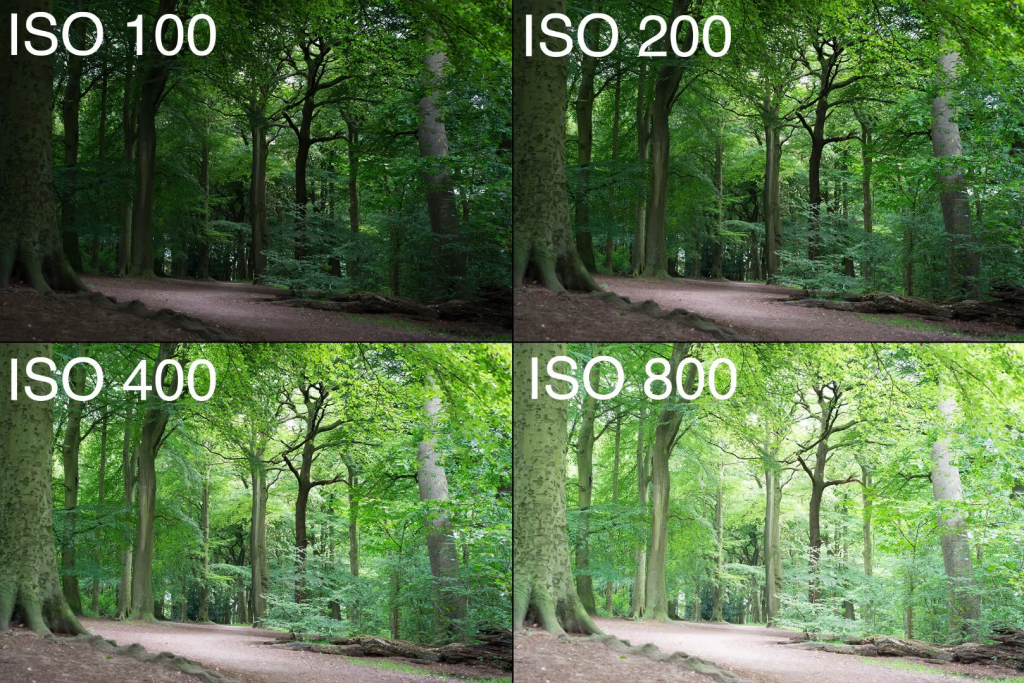
In traditional film photography, ISO was determined by the type of film being used. For example, a roll of film with an ISO of 100 would be less sensitive to light than a roll of film with an ISO of 400. In digital photography, the ISO can be adjusted on the fly, allowing you to change the sensitivity of the sensor without having to change the film.
When you’re taking a photo, the goal is to get the correct amount of light into the camera. The aperture and shutter speed settings control how much light enters the camera, but ISO helps you to fine-tune the exposure. If you’re in a low light situation and you need to take a photo, you can increase the ISO to make the sensor more sensitive to light. This will allow you to use a faster shutter speed or a smaller aperture, which will help you to take a photo without camera shake or blur.
However, increasing the ISO also has its downsides. The higher the ISO, the more noise (or grain) will be present in the final image. Noise is the speckling effect that can be seen in photos, especially in the darker areas. So, if you’re shooting in good lighting conditions, it’s best to use the lowest ISO possible to achieve the best image quality.
In conclusion, ISO is an important setting to understand when it comes to photography. It allows you to control the sensitivity of your camera’s sensor to light, which helps you to fine-tune the exposure of your photos. While increasing the ISO can help you to take photos in low light conditions, it also introduces noise into the final image, so it’s important to use the lowest ISO possible when shooting in good lighting conditions.
 The Inquisitive Journal